
School Supply Delivery: The Labeling System That Works
A practical guide to school supply delivery: consolidate POs, label every box by teacher and room, and keep orders from stalling at the front office.
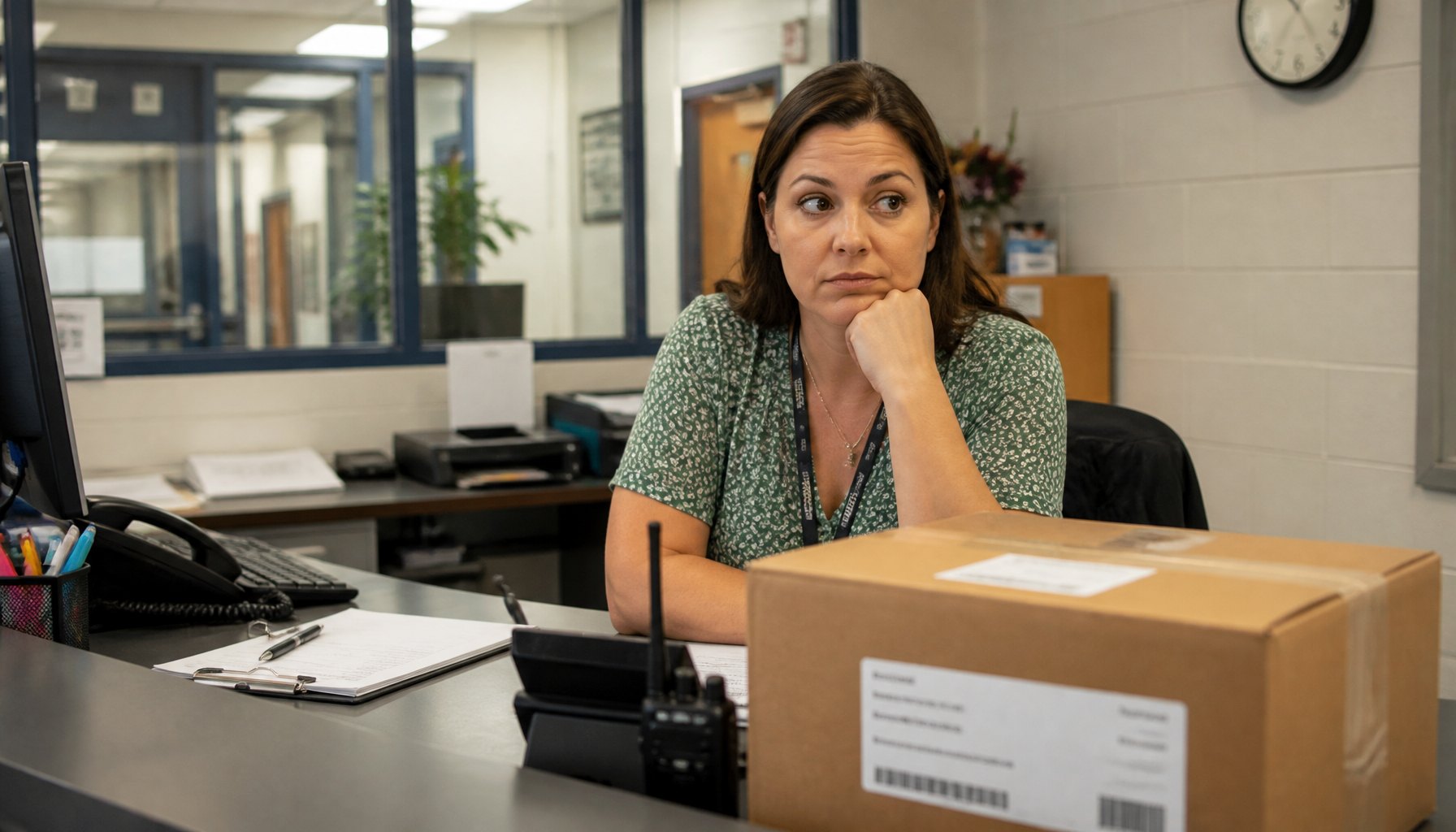
School supply delivery fails less often because of the product than because of the paperwork and packaging around it. A carton arrives at the front office with a vendor name on the label, no teacher name, and a room number that may not exist. Office staff set it aside, a week passes, and the teacher who ordered the contents is still waiting. A single system, built on consolidated purchase orders and boxes labeled down to the classroom, resolves most of these failures.
Why School Supply Delivery Breaks Down
Classroom supplies are small-ticket items, yet they hold up instruction in practical ways. A battery shortage stalls a science activity, a missing roll of thermal labels halts library check-in, and an air purifier filter that never reaches the right room leaves equipment running below its purpose. Each delivery problem looks minor on its own. Across a school site over a year, the problems accumulate into lost instructional time and administrator hours.
Procurement structure is where most of the trouble begins. Many districts require a purchase order for every transaction, so each teacher request can generate its own paperwork, its own approval, and its own shipment. Fragmented orders produce fragmented deliveries, and receiving staff must then match unlabeled cartons to requisitions by hand. In most cases the person doing the matching is a secretary or custodian whose main duties lie elsewhere.
Budget pressure raises the stakes. EdSurge [trade publication] reports that districts are moving from buying tools because they look appealing to asking whether those tools work, and that tighter budgets are pushing leaders to simplify what they buy Too Many Tools, Not Enough Impact: Districts Rethink .... That reporting concerns education technology specifically, though the discipline transfers to physical supplies. Duplicate orders, split shipments, and boxes that cannot be located are costs a clear process removes.
The workload dimension deserves equal weight. A teacher who spends a prep period walking the building to find a missing carton has lost time that belongs to lesson planning or to students. Teaching is purposeful work, and administrative friction that a school controls directly should not take time from it. Delivery is one of the few sources of friction that a site can eliminate without waiting for a policy change.
The information needed to fix the problem already exists. The Common Core of Data, maintained by the National Center for Education Statistics [government data], is the Department of Education's primary database on public elementary and secondary schools and districts CCD - National Center for Education Statistics (NCES). Every site has an identity on record, and every classroom has a number. The gap lies in getting those details onto the outside of the box.
How to Master School Supply Delivery: Four Parts of a Labeled-Box System
The system rests on four elements: a consolidated purchase order, a standard label, a single receiving point, and a closing confirmation. Each addresses a specific failure point in the usual sequence from request to classroom. None requires new software or additional staff. All four depend on agreeing in advance who does what and in what order.
Consolidate requests onto one purchase order
The first element is collecting teacher requests over a fixed window and placing them on a single purchase order per vendor per cycle. A department chair or site coordinator gathers the lists, checks each line against the funding source, and submits one package for approval. The result is one approval, one invoice to reconcile, and far fewer shipments to track. Teachers also gain a predictable rhythm, since they know when requests are due and when deliveries should arrive.
Funding rules deserve attention at this stage. A 2019 report hosted by ERIC [government data] observes, in the context of school turnaround, that state resource guides on the allowable use of different funding sources can help districts make the most of existing resources Resource Allocation Strategies to Support the Four Domains .... Coordinators who keep such a guide at hand can sort requests into the correct fund before submission rather than after a rejection. That sorting step prevents the delays that otherwise surface three weeks into an order.
Standardize the label
The second element is a label with four fixed fields: teacher name, room number, school site, and purchase order number. The label should sit in the same position on every carton and be printed large enough to read from a cart. Vendors that accept label specifications can apply it before shipping. When a vendor cannot, receiving staff should relabel cartons at the dock before anything moves into the building.
Box assignment matters as much as the label itself. A teacher's order should travel as one unit, with a box or set of boxes marked for that teacher, instead of being divided by product type across the shipment. Unit-level packing allows a student aide or custodian to deliver without making decisions. It also lets the teacher check contents against the original list in one sitting.
Route everything through one receiving point
The third element is a single door, a single person, and a single log. The designated receiver checks cartons against the packing list, notes visible damage, and stages boxes by wing or hallway. Deliveries that arrive outside the receiving point, such as a carton left at a side entrance, tend to be the ones that go missing. Naming a backup for absences keeps the process from depending on one person.
A short written log is sufficient. It records the date, the purchase order number, the number of cartons, and the condition on arrival. If a discrepancy surfaces later, the log gives the coordinator and the vendor a shared record to work from. Disputes that once took weeks of email tend to resolve quickly when that record exists.
Close the loop with teacher confirmation
The fourth element is a short confirmation from each teacher after delivery, ideally within a few school days. The teacher checks the contents against the original request and reports shortages or damage to the coordinator. Confirmation closes the purchase order line and starts the clock on any vendor correction. Reporting while the shipment is still fresh also keeps return windows open.
The mechanism behind the whole system is simple. Identification work moves upstream, to the people who know the answers at the moment the order is placed, instead of falling downstream on whoever happens to be standing near a pallet. A label written by the person who ordered the supplies is almost never wrong. A label guessed at by someone receiving the supplies often is.
Your Learning Roadmap: Rolling Out the System in One Semester
A staged rollout lowers risk and builds credibility with staff. Each stage below produces a deliverable that can be reviewed before the next begins. Sites with a dedicated office manager can usually move faster than the timeline suggests, while larger campuses may need an additional cycle at the pilot stage.
Stage 1: Audit the current process
Start by pulling the last term's orders and tracing each one from request to classroom. Count how many shipments arrived split, late, mislabeled, or at the wrong site. Record the time between approval and the teacher holding the supplies. This baseline gives the later results something to be measured against, and it often reveals that a small number of recurring causes account for most problems.
Stage 2: Build the roster and the label template
Create a current roster listing every teacher with a verified room number, building, and site name. Check the roster against the school's own records, since mid-year room changes and shared spaces are common sources of error. Then design a single label template with the four fixed fields and test-print it on the label stock the site uses. Keep the roster in one shared location and assign one person to update it.
Stage 3: Pilot with one department or grade level
Run one full order cycle with a single group, such as one grade level or one department. Collect requests on a set date, submit a single purchase order, and require labeled boxes at delivery. Use the receiving log and teacher confirmations throughout. At the end of the cycle, compare the results with the baseline from the audit and note every point where the process slowed down.
Stage 4: Expand and set a cadence
Once the pilot runs cleanly, extend the system to the whole site and fix the calendar. Many schools settle on a monthly or quarterly cycle, with request deadlines published at the start of the year. Predictable timing reduces the urgent one-off orders that break consolidation. Exceptions for true emergencies should remain available, but they should be rare and logged.
Choosing vendors that fit the system
Vendor selection should follow the same logic. Useful criteria include acceptance of purchase orders, the ability to consolidate multiple teacher requests onto one order, labeling to the school's specification, a clear delivery commitment to the classroom, and a documented return process. Vendors that cannot meet two or more of these tend to push the work back onto school staff. Ask for these terms in writing before the first order.
Milestones and measures
Three measures are enough to judge progress. The first is the time between order approval and classroom delivery. The second is the number of cartons that required a search to locate. The third is the number of discrepancies reported at confirmation. EdSurge [trade publication] notes that districts are increasingly using usage data to decide what to keep, and the same habit of measuring applies here Too Many Tools, Not Enough Impact: Districts Rethink .... A reasonable first milestone is a full cycle with no cartons that need locating.
Expect a few recurring complications. Teachers who change rooms midyear, staff who split time across two sites, and long-term substitutes all need a clear rule for who updates the roster and by when. Writing that rule into the procedure, rather than handling each case individually, keeps the labels accurate. The first semester usually surfaces most of these cases, and the second semester runs more smoothly as a result.
Get Started Today
The first step requires no budget and no approval. Pull the last term's orders, mark which ones arrived late, split, or unlabeled, and write down the causes. That one-page audit is enough to make the case for a pilot to a principal or business manager. It also gives teachers evidence that the problem is understood and can be fixed.
From there, choose one department, build the roster, print one standard label, and run a single consolidated order. Teachers who receive complete, correctly labeled boxes at the classroom door get time back for the work they chose to do. Students benefit when materials are in the room on the day the lesson needs them. A sound system for school supply delivery is a practical way to protect that time.